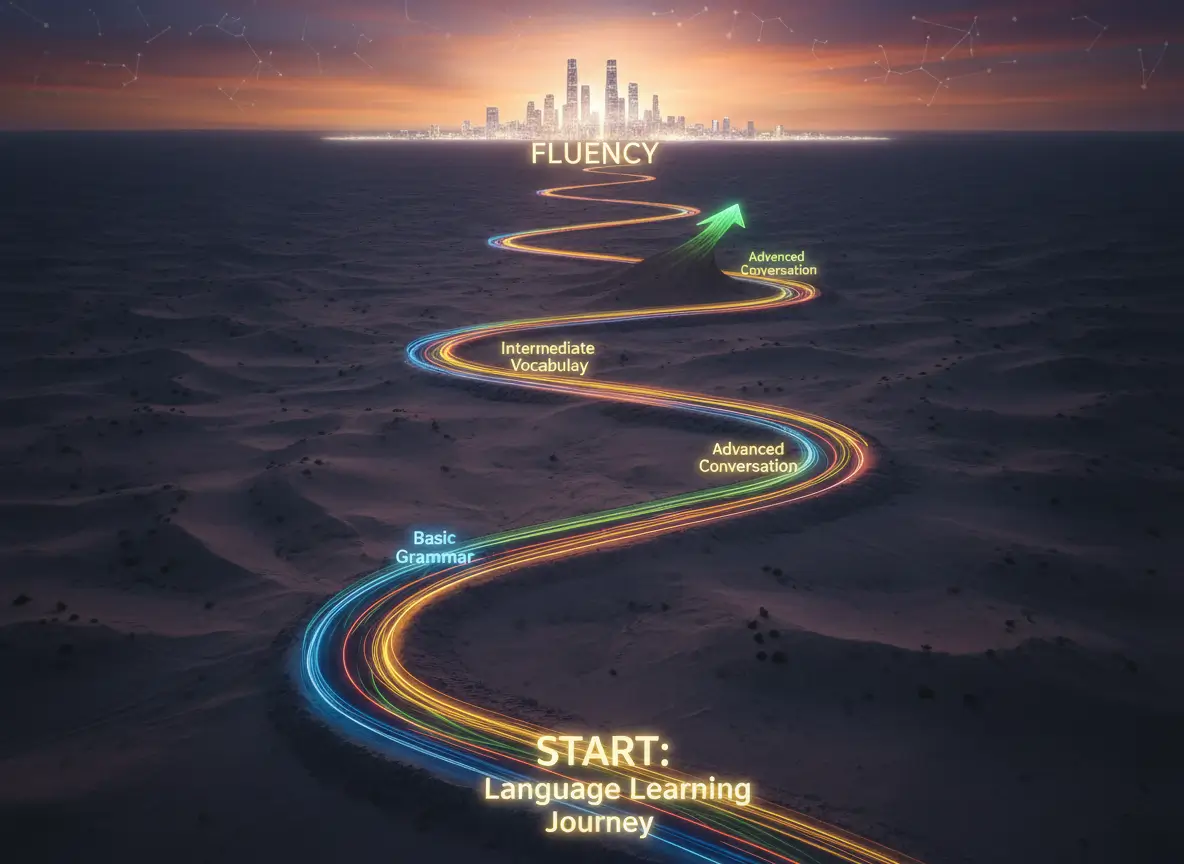

how long does it take to learn arabic You’ve probably searched this question, read three different answers, and ended up more confused than when you started.
One article says “6 months.” Another says “7 years.” A third throws around numbers like “2,200 hours” without telling you what that actually means for your life.
Here’s what we’ll do differently: we teach Arabic every single day at Alphabet Arabic Academy, and we’ve watched hundreds of students — from complete beginners in Canada to Muslim parents in the UK — go through this exact journey. We’ll tell you what we’ve actually observed, not just what the textbooks say.
The honest answer is: it depends on what you mean by “learn Arabic.” A student who wants to read the Quran has a very different journey than someone who needs to negotiate contracts in Cairo. Let’s break it down properly.
What Does “Learning Arabic” Actually Mean?
Before we talk timelines, we need to get clear on something most articles skip: Arabic isn’t one thing.
There are three distinct tracks most learners fall into:
1. Conversational Arabic (Egyptian Dialect) The Arabic people actually speak in daily life. If you want to travel, make friends, or watch Egyptian TV and understand it — this is your path. Egyptian Arabic is the most widely understood dialect in the Arab world.
2. Modern Standard Arabic (MSA / Fusha) The formal, written Arabic used in news, books, government, and formal speeches. You’ll need this for professional work, academic study, or reading Arabic literature.
3. Quranic Arabic The classical language of the Quran. Slightly different from MSA in vocabulary and style. This is the goal for millions of Muslims worldwide who want a spiritual connection to their faith.
Each track has its own realistic timeline. And here at Alphabet Arabic Academy, we’ve seen students succeed in all three — with the right approach.
The Honest Timeline: By Goal
🕌 Goal 1: Read the Quran with Basic Tajweed
Realistic Timeline: 6 to 18 months
This is the most common goal we see from our students, especially Muslim adults in the UK, US, Canada, and Australia who grew up outside the Arab world.
The good news: you don’t need to master all of Arabic grammar to read the Quran. You need the alphabet, correct pronunciation (Tajweed), and enough exposure to recognize common Quranic words.
What we’ve seen at Alphabet Arabic Academy: A student from Manchester, UK, started with zero Arabic knowledge. After 14 months of twice-weekly lessons with our Quran teachers, she was reading Surah Al-Baqarah independently with proper Tajweed. Her teacher focused on pronunciation first, then letter connections, then basic Tajweed rules.
To understand the meaning as you read — that’s a longer journey, typically 2–3 years. But reading confidently comes much sooner.
🗣️ Goal 2: Basic Conversational Arabic (Survive & Connect)
Realistic Timeline: 6 to 12 months
“Basic conversational” means: you can introduce yourself, ask for directions, order food, handle simple social situations, and have short but real conversations with native speakers.
How many hours? Around 200–350 hours of structured study gets most English speakers to this point. That’s roughly:
- 6 months if you study 1.5 hours/day
- 10 months if you study 1 hour/day
- 12–15 months if you study 30 minutes/day
The dialect you choose matters enormously here. Egyptian Arabic is the fastest path to being understood across the Arab world, because it’s the most familiar dialect from decades of Egyptian cinema and television.
💼 Goal 3: Professional / Working Proficiency (MSA)
Realistic Timeline: 2 to 4 years
This is what journalists, diplomats, NGO workers, and business professionals need. You can read Arabic news, write formal emails, follow meetings, and engage in serious conversations on complex topics.
The U.S. Foreign Service Institute (FSI) — which trains American diplomats in foreign languages — classifies Arabic as a Category IV language, the most challenging tier for English speakers. Their estimate: 2,200 hours to reach professional working proficiency.
That sounds intimidating. But let’s put it in perspective:
| Study Hours Per Day | Time to Reach Working Proficiency |
|---|---|
| 30 minutes/day | ~12 years |
| 1 hour/day | ~6 years |
| 2 hours/day | ~3 years |
| 3 hours/day (intensive) | ~2 years |
This is why an intensive Arabic course with a native teacher dramatically cuts the timeline. Self-study is much slower because you spend time studying incorrectly and then having to unlearn bad habits.
📖 Goal 4: Full Arabic Fluency (Native-Level Understanding)
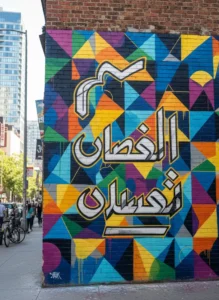
Realistic Timeline: 5 to 10 years
True fluency — where you can read Arabic literature, follow rapid dialectal conversations, get subtle humor, and write eloquently — takes years of immersion and dedication.
Very few learners need or target this level. But if you do, the path is clear: structured lessons + daily immersion + living in or deeply engaging with Arabic media and culture.
5 Factors That Change Your Timeline (Drastically)
The FSI numbers above assume average conditions. Your specific situation can make Arabic much faster or slower.
1. Your Native Language
If you already speak Hebrew, Amharic, or any Semitic language, you have a significant head start. The root-based word system will feel intuitive rather than alien.
If you speak English only, plan for the longer estimates. The alphabet, the right-to-left direction, the root system, and the grammar are all genuinely unfamiliar territory.
2. Your Learning Method
This is the single biggest variable in your timeline.
Self-study with apps: Slow. Apps like Duolingo are useful supplements but they don’t build real conversational ability. Students who rely on apps alone typically plateau within months.
Group classes: Moderate pace. You progress, but you also wait for others.
1-on-1 with a native teacher: The fastest method, consistently. When your teacher knows your exact weaknesses and adapts every lesson to your goals, you eliminate wasted time. This is what our teachers at Alphabet Arabic Academy do in every session.
3. Consistency vs. Intensity
One hour every day beats six hours every Saturday. Language learning happens in the spaces between sessions — when your brain consolidates what it learned during sleep, when you catch an Arabic word on the street and recognize it.
Students at our academy who study 45 minutes daily progress roughly twice as fast as those who take two 90-minute lessons per week.
4. Which Arabic You’re Learning First
Starting with Egyptian Arabic (dialect) often leads to faster early results because:
- Grammar is simpler than MSA
- You practice with the most widely understood accent
- You build confidence quickly through real conversations
Starting with MSA gives you a stronger grammatical foundation but can feel abstract for longer.
Many serious learners do both simultaneously — which our full Arabic course is designed to support.
5. What You Do Outside Class
The students who learn fastest aren’t necessarily the ones with the most hours of formal instruction. They’re the ones who:
- Watch Egyptian TV shows with Arabic subtitles
- Listen to Arabic music and look up lyrics
- Follow Arabic social media accounts
- Practice reading road signs, restaurant menus, and news headlines
Immersion outside the classroom multiplies the effect of every lesson inside it.
Realistic Milestones: Week by Week
Here’s a rough guide to what you can realistically expect with consistent, structured study:
Weeks 1–4 You learn the Arabic alphabet and can read simple words aloud (even without understanding them). You know greetings, numbers 1–20, and basic introductions. This foundation is genuinely achievable in one month.
Months 2–3 You can have short, scripted conversations. Introduce yourself, ask basic questions, understand slow, clear speech. You’re starting to recognize root patterns in words.
Months 4–6 Real conversations become possible, if simple. You can handle daily situations: shopping, directions, meeting new people. Reading short texts with vowel marks (Tashkeel) is becoming comfortable.
Months 6–12 Conversational confidence grows. You’re starting to watch Arabic media and catch more than you miss. Your vocabulary expands faster now because patterns are clicking.
Year 2 and Beyond The compounding effect kicks in. Progress accelerates. Grammar becomes intuitive rather than calculated.
The Question We Always Get: “Can I Learn Arabic in 3 Months?”
Yes and no.

In 3 months of focused daily study (1–2 hours/day), you can absolutely:
- ✅ Master the alphabet completely
- ✅ Hold basic conversations in Egyptian Arabic
- ✅ Read simple Arabic texts
- ✅ Begin reading Quran with guidance
What you can’t do in 3 months:
- ❌ Achieve natural conversational fluency
- ❌ Read Arabic news without heavy use of a dictionary
- ❌ Understand native speakers speaking at full speed
Three months is enough to prove to yourself that you can do this — and to build real momentum.
What Slows People Down (And How to Avoid It)
In our experience teaching hundreds of students, the most common reasons learners take longer than they should:
Switching methods constantly. Starting Duolingo, then a YouTube channel, then an app, then a class, never committing long enough to see results. Pick one structured method and stick with it for at least 3 months.
Skipping the alphabet phase. Trying to learn Arabic using transliteration (writing Arabic words in English letters) is a shortcut that creates a long-term problem. The alphabet takes 2–4 weeks to learn. It’s worth every day.
Learning without speaking. Reading and listening without actually producing Arabic speech delays fluency significantly. Speak from day one, even badly.
No native speaker feedback. You can spend years practicing incorrect pronunciation and never know it until a native speaker looks at you blankly. A good teacher catches this in the first lesson.
How to Shorten Your Timeline Significantly
The students at Alphabet Arabic Academy who progress fastest share a few habits:
They have a specific goal. “I want to read Surah Al-Baqarah by Ramadan” is better than “I want to learn Arabic.” Specific goals create specific study habits.
They study with a native Egyptian teacher. Not because Egyptian Arabic is the only dialect worth learning, but because native speakers teach pronunciation, rhythm, and cultural nuance that no app or textbook can replicate.
They make Arabic part of their daily life, not just their lesson schedule. Even 10 minutes of reading Arabic Instagram captions counts. Even recognizing Arabic words in a restaurant menu builds the habit.
They track their hours. Language learning is a long game. Tracking hours gives you objective proof of progress on days when you feel like you haven’t improved.
Your Honest Next Step
If you’ve read this far, you’re not someone looking for a shortcut. You’re someone who wants to actually do this properly.
The best thing we can offer you isn’t another article. It’s a real conversation with a real teacher who can assess exactly where you are and show you exactly how long your journey will realistically take.
👉 Book your free 60-minute trial lesson at Alphabet Arabic Academy — no payment, no commitment, just an honest assessment and your first real Arabic lesson.
Frequently Asked Questions

How long does it take to learn Arabic? It depends on your goal. Basic conversational Arabic takes 6–12 months of consistent study (around 300–400 hours). Reading the Quran with Tajweed typically takes 1–2 years. Full professional fluency in MSA requires 2,200+ hours according to the FSI, which translates to 3–5 years of regular study.
Can I learn Arabic in 3 months? In 3 months of intensive daily study (2–3 hours/day), you can realistically learn the Arabic alphabet, master basic greetings and phrases, and hold simple conversations. Full fluency in 3 months is not realistic, but meaningful progress absolutely is.
Is Arabic the hardest language to learn? Arabic is classified as a Category IV language by the U.S. Foreign Service Institute, making it one of the most challenging for native English speakers. However, with a structured method and a native Egyptian teacher, most students make faster progress than they expect.
How long does it take to learn Arabic to read the Quran? Most students can read the Quran with basic Tajweed in 6–18 months with consistent lessons. Understanding the meaning of what you read takes longer — typically 2–3 years of dedicated study in Quranic Arabic.
How many hours a day should I study Arabic? 30–60 minutes of focused daily practice is far more effective than occasional 3-hour sessions. Consistency beats intensity in language learning. Students at Alphabet Arabic Academy who study 45 minutes per day with a native teacher typically reach conversational level within 8–12 months.
Written by the teaching team at Alphabet Arabic Academy — certified native Egyptian Arabic teachers with experience across students from 80+ countries.